
More Intensive Training Needed for Stroke Rehabilitation Programs, with Recommendations from the European Stroke Guidelines

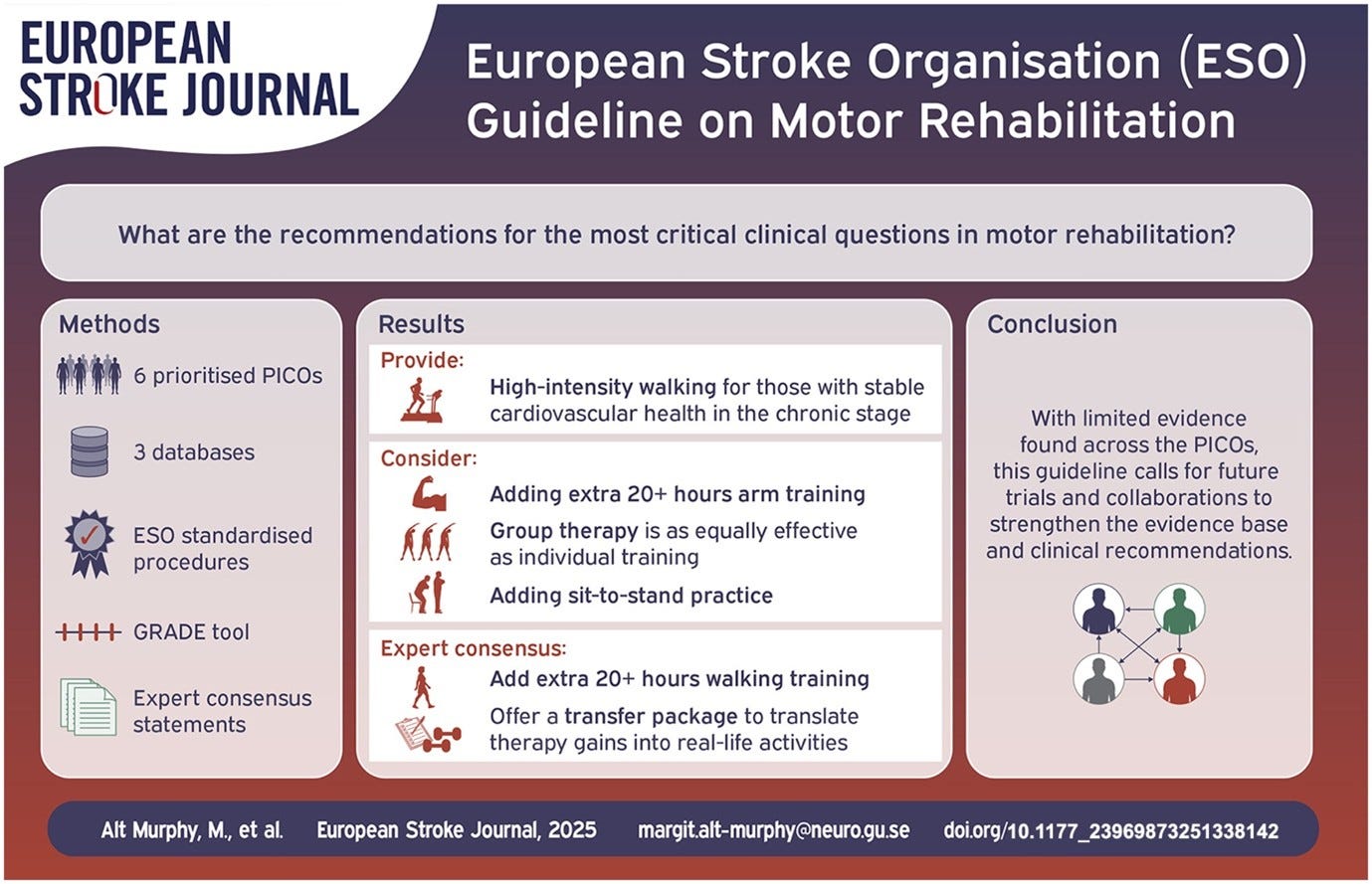
The European Stroke Organisation (ESO) has recently released a guideline on motor rehabilitation, addressing critical clinical questions to support clinicians and healthcare providers for post-stroke motor rehabilitation [1].
Motor rehabilitation targets different aspects of functioning with the overall goal of maximizing people’s independence, participation, and well-being. It follows principles of motor learning where patients re-learn motor, sensory, and cognitive functions through appropriately dosed, repetitive, progressive, task-, goal-, and context-oriented training.
This 2025 guideline provides updates on evidence-based guidelines in six agreed-upon critical areas. However, healthcare providers must critically evaluate both the strength of evidence and practical implementation requirement.
Upper Limb Therapy: Evidence and Implementation Analysis
The guidelines suggest adding approximately 20 hours extra of repetitive upper limb training to existing rehabilitation programs, with 3-5 days of therapy sessions per week. Additionally, they recommend implementing a transfer package, designed to help patients apply their therapy gains to real-life daily activities.
Upon closer examination of the studies used, two randomized-controlled studies were reviewed, with only one directly comparing 60-90 hours of training with 30 hours of training [2]. The other study compared the time-limited window between the acute and subacute stages of stroke. Results show a significant difference in upper limb motor recovery when 20 extra hours of therapy were provided in the subacute stage (2-3 months post-stroke) compared to the acute stage (within 30 days post-stroke). [3]
In a previous 2023 ESO review, 5 high-quality evidence-based clinical practice guidelines published between 2016-2022, strongly recommend the following upper limb therapies [4]:
- AU/NZ: At least 2 hours of active therapy daily for 2 weeks, with restraint for at least 6 hours daily. Active intensive therapy is key.
- US: Robotic therapy is reasonable to consider to deliver more intensive practice for individuals with moderate to severe upper limb paresis.
- CA: Functional Electrical Stimulation (FES) targeted at the wrist- and finger-flexors and extensors should be considered to reduce motor impairments and improve function.
- UK: Suitable patients should be encouraged to participate in mental practice of an activity to improve arm function, as an adjunct to conventional therapy.
- NL: Unilateral robot-assisted training of paretic shoulder and elbow improved dissociated movements and arm strength and reduces atypical pain in the paretic arm.
[For full recommendations, please refer to Kwakkel et al. (2023)]
It is safe to assume that therapists can safely use robotics and FES to help patients achieve this extra 20 hours of intensive training.
The key point from the Australia and New Zealand guideline is the importance of active therapy. More often than not, a scheduled hour of therapy typically only includes 30-40 minutes of active therapy. The remaining time is spent on patient assessments, transfers, setting up patients on equipment, note-taking, and planning for future treatment.
For the transfer package, this would include daily evaluation, a patient-kept diary, problem-solving, a behavioral contract, and home practice of specified exercises. These exercises would be a couple of selected tasks practiced for 15-30 minutes every day.
Lower Limb Therapy: High-Intensity, Group-Based, and Sit-To-Stand (STS) Training
The guidelines recommended including an additional 20 hours of gait training, emphasizing on high-intensity walking rather than duration-matched walking training at lower intensities. High-intensity walking was defined as either:
- 60-84% Heart Rate Reserve (HRR)
- 77-93% Heart Rate Maximum
- 4-16 on the Borg Scale Rating of Perceived Exertion
Research by Klassen et al. (2020) shows that the group with the higher dose of walking practice (averaging 3921 total minutes) demonstrated the greatest improvement in walking endurance (6MWT) and walking speed [5].
The guidelines also suggested task-specific group-based therapy for improving balance capacity, gait speed, and walking endurance. Although only including 5 randomized-controlled trials (RCT) for comparison, other Cochrane reviews and guidelines have also supported the effectiveness of group-based therapy.
Kim et al. [6] and Renner et al. [7] suggest that having 2-3 patients per therapist and up to 2-8 patients in a group can be beneficial. However, the key is to offer both group training and individual therapy to provide better, more personalized, and targeted practice.
Lastly, the guidelines recommend additional sit-to-stand (STS) practice, in addition to usual care, to enhance postural balance capacity. The 4 studies varied in biases and so, the Cochrane review by Pollock et al found that time taken to complete sit-to-stand and lateral weight distribution symmetry improved during STS, compared to conventional therapy. However, there is still no consensus on the parameters of repetition, sessions, and adequate duration for STS.
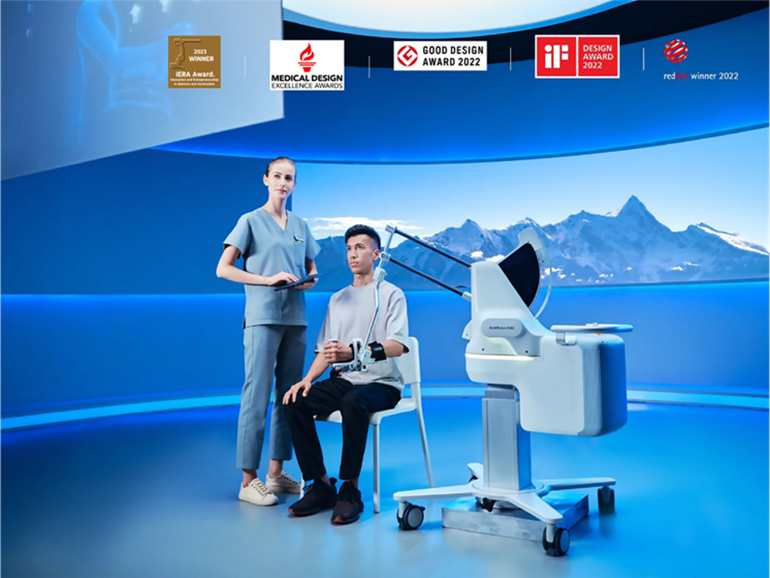
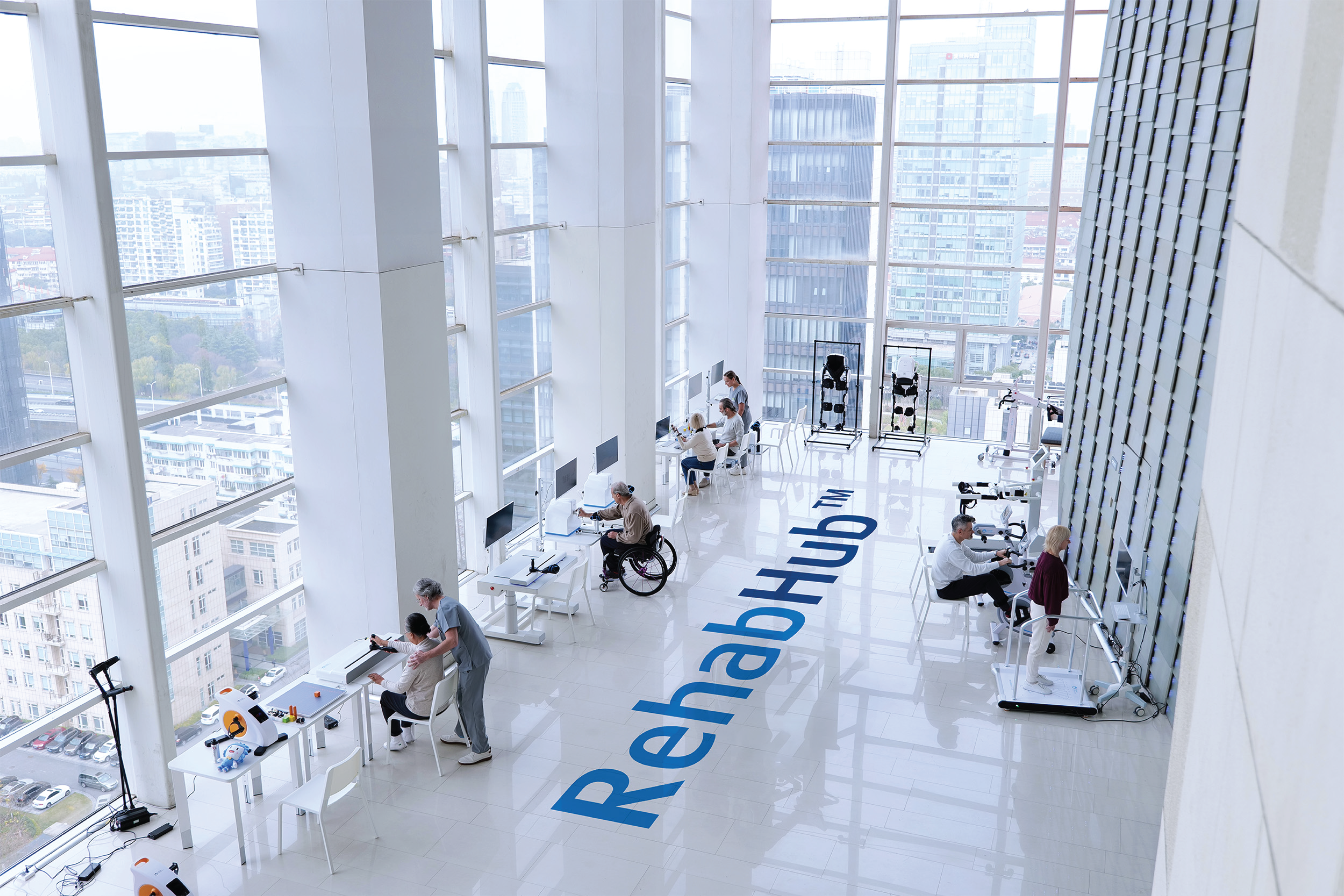
Robotic Solutions for Intensive Training
Advanced rehabilitation robotics can help bridge the efficiency gap by:
- Maximizing active therapy time through automated setup and monitoring
- Delivering consistent, high-repetition training that would be physically demanding for human therapists
- Enabling therapists to supervise multiple patients simultaneously
- Deliver engaging and variable therapy to keep patients motivated
- Providing objective measurement and documentation, reducing administrative burden
This approach can help manage staffing needs, as adding 20-hours per patient may require an additional 1.5-2.0 FTE therapist per 10-patient caseloads.
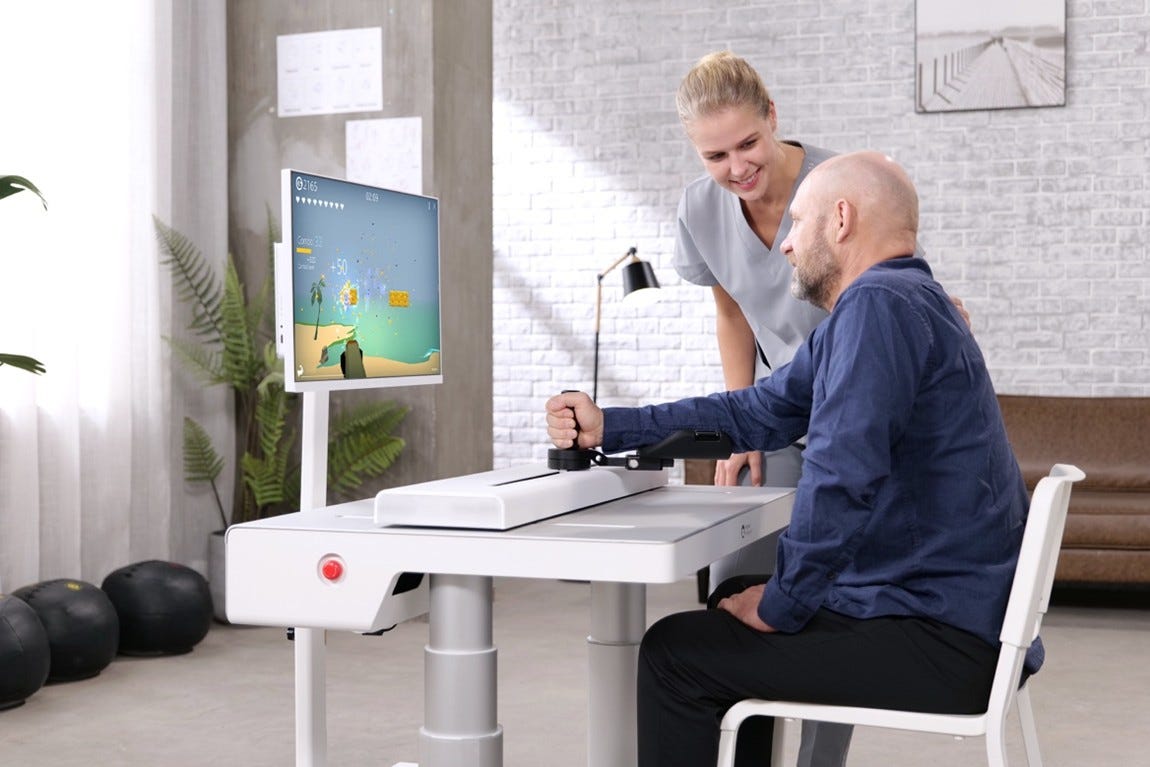
Current research supports and shows evidence that robotic therapy can safely deliver intensive practice for individuals with moderate to severe upper limb paresis.
Conclusion
The new ESO guideline is a strong step forward, being the first of its kind to focus on motor rehabilitation for post-stroke patients. However, there is a need for future trials to compare therapy elements specifically as there is limited evidence to support the recommendations.
Even so, the guideline provides a valuable foundation for improving stroke rehabilitation. By thoughtfully implementing these recommendations with the appropriate technologies and approaches, rehabilitation facilities can work towards the ultimate goal: maximizing independence, participation, and well-being for stroke survivors.
What are your thoughts on implementing these intensive training recommendations in your facility? We’d welcome your insights on practical challenges and creative solutions you’ve discovered.
Reference:
[1] Alt Murphy M, Munoz-Novoa M, Heremans C, et al. European Stroke Organisation (ESO) guideline on motor rehabilitation. European Stroke Journal. 2025;0(0). doi:10.1177/23969873251338142
[2] Han C, Wang Q, Meng P, Qi M. Effects of intensity of arm training on hemiplegic upper extremity motor recovery in stroke patients: a randomized controlled trial. Clinical Rehabilitation. 2012;27(1):75-81. doi:10.1177/0269215512447223
[3] Dromerick, A. W., Geed, S., Barth, J., Brady, K., Giannetti, M. L., Mitchell, A., ... & Edwards, D. F. (2021). Critical Period After Stroke Study (CPASS): A phase II clinical trial testing an optimal time for motor recovery after stroke in humans. Proceedings of the National Academy of Sciences, 118(39), e2026676118.
[4] Kwakkel G, Stinear C, Essers B, Munoz-Novoa M, Branscheidt M, Cabanas-Valdés R, Lakičević S, Lampropoulou S, Luft AR, Marque P, Moore SA, Solomon JM, Swinnen E, Turolla A, Alt Murphy M, Verheyden G. Motor rehabilitation after stroke: European Stroke Organisation (ESO) consensus-based definition and guiding framework. Eur Stroke J. 2023 Dec;8(4):880-894. doi: 10.1177/23969873231191304. Epub 2023 Aug 7. PMID: 37548025; PMCID: PMC10683740.
[5] Klassen, T. D., Dukelow, S. P., Bayley, M. T., Benavente, O., Hill, M. D., Krassioukov, A., ... & Eng, J. J. (2020). Higher doses improve walking recovery during stroke inpatient rehabilitation. Stroke, 51(9), 2639-2648.
[6] Kim B, Park Y, Seo Y, et al. Effects of individualized versus group task-oriented circuit training on balance ability and gait endurance in chronic stroke inpatients. J Phys Ther Sci 2016; 28: 1872–1875.
[7] Renner CIE, Outermans J, Ludwig R, et al. Group therapy task training versus individual task training during inpatient stroke rehabilitation: a randomised controlled trial. Clin Rehabil 2016; 30: 637–648.
[8] Pollock A, Gray C, Culham E, et al. Interventions for improving sit-to-stand ability following stroke. Cochrane Database Syst Rev 2014; 2014: Cd007232.